Physics


- Description
- Curriculum
- Reviews
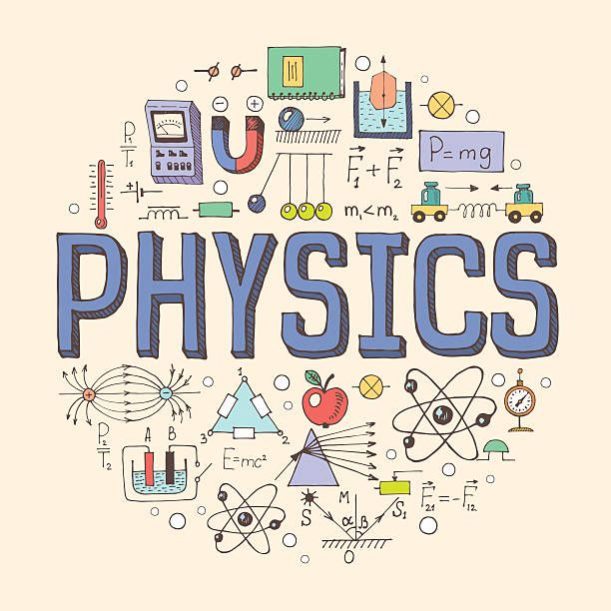
Physics equips pupils with a systematic understanding of the fundamental principles governing matter, energy, and the physical universe. The course develops conceptual and practical knowledge of forces, motion, energy transfer, waves, electricity, magnetism, and the structure of matter, enabling pupils to interpret natural phenomena and technological applications.
Pupils will study:
-
Forces and motion: The effects of forces on motion, Newton’s laws, speed, velocity, acceleration, and graphical representation of motion.
-
Energy: Different energy stores, conservation of energy, energy transfer, efficiency, and calculations involving work done and power.
-
Waves: Properties of transverse and longitudinal waves, reflection, refraction, diffraction, sound waves, and the electromagnetic spectrum.
-
Electricity: Current, voltage, resistance, series and parallel circuits, electrical power, domestic electricity, and safety.
-
Magnetism and electromagnetism: Magnetic fields, electromagnets, the motor effect, and applications in devices.
-
Matter: The particle model, density, changes of state, internal energy, and specific heat capacity.
-
Atomic structure and radiation: The structure of the atom, isotopes, nuclear radiation, half-life, and uses and hazards of radiation.
-
Space physics: The solar system, life cycle of stars, red-shift, and evidence for the expanding universe.

This course is primarily meant for pupils in their 7th, 8th and 9th Year of studies typically between the age of 11 - 14.